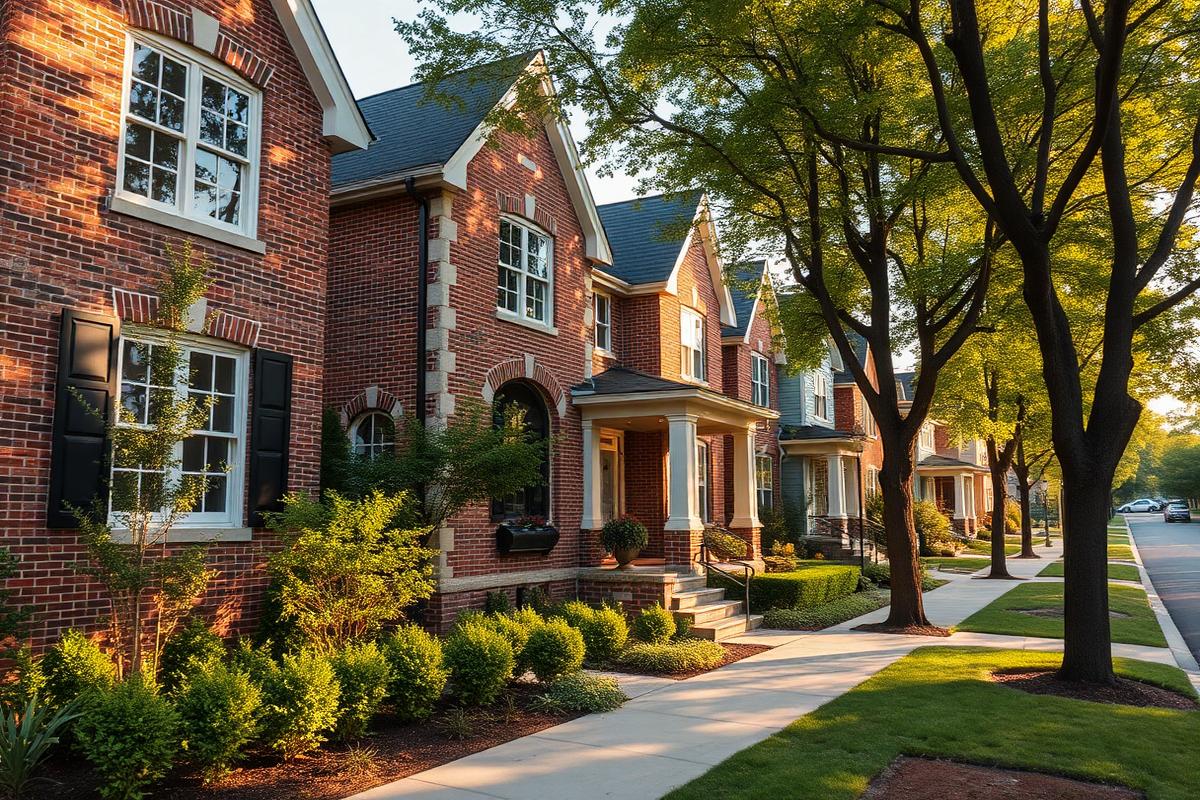
The Village of West Clay in Carmel, Indiana offers luxury living in Indiana through walkable streets, architecturally distinctive homes, and a curated mix of dining, retail, and green space, all within Carmel Clay Schools and minutes from downtown Carmel and Indianapolis.
What makes the Village of West Clay a center of luxury living in Indiana?
The Village of West Clay is a master-planned community in Carmel, Indiana that delivers luxury living in Indiana through a rare combination: architecturally cohesive homes, genuinely walkable streets, and a curated mix of shops, restaurants, and green space, all inside one of the state's most sought-after school districts. It's not a gated enclave or a cookie-cutter subdivision. It's a neighborhood built around the idea that where you live should feel like somewhere.
Key Takeaways
- The Village of West Clay is a new-urbanist community in Carmel, Indiana, designed around walkability, architectural variety, and a mix of home types from townhomes to estate properties.
- Residents are within Carmel Clay Schools, one of Indiana's most recognized public school districts, and minutes from both downtown Carmel and the US 31 corridor into Indianapolis.
- The Indianapolis MSA recorded 3,445 residential transactions in August 2026, according to the Indiana Association of REALTORS, a regional indicator of the active market West Clay buyers are competing in.
- Architectural styles range from Federal and Georgian to Craftsman and French Country, with strict design standards that protect long-term character and value.
- Broker fees and commissions are fully negotiable and not set by law, there is no standard or customary rate.
What does luxury living in Indiana actually look like at West Clay?
I've worked with buyers across the Indianapolis metro, from luxury homes in Hamilton County to waterfront properties at Geist, and West Clay consistently surprises people who come in expecting another upscale subdivision. It isn't one.
The Village of West Clay was developed under new urbanist principles, which means the design prioritizes human scale over car scale. Streets are narrow by intention. Front porches face sidewalks. Garages are tucked behind homes on alleys. The result is a neighborhood where you actually see your neighbors, and where a walk to dinner or a Saturday morning coffee run is a real option, not a marketing claim.
Architecture that earns its price tag
One of the first things buyers notice is the range of architectural styles, and the consistency of quality. West Clay's design standards require homes to reflect traditional forms: Federal, Georgian, Craftsman, French Country, and Colonial Revival are all represented. No two blocks look identical, but the neighborhood reads as cohesive because the standards are enforced.
That matters for value. When every home on a street is built to a standard, no single property drags down the character of the block. I tell buyers that the design review process here isn't a bureaucratic hurdle, it's one of the reasons West Clay holds its appeal over time.
Home types: more range than buyers expect
West Clay isn't just estate homes. The community includes townhomes, cottage-style properties, single-family homes on smaller lots, and larger custom builds on estate-sized parcels. That range means buyers at different price points and life stages can find something here, whether you're downsizing from a larger property elsewhere in Carmel or looking for a primary residence with room to grow.
New construction remains active in parts of the community. If you're weighing a resale home against a new build, the considerations are different, timeline, customization options, and how the lot fits the streetscape all come into play. That's a conversation worth having before you start touring.
How does West Clay's location and amenity mix support everyday luxury living?
Location is where West Clay makes a strong case. The community sits in western Carmel, roughly 20 miles north of downtown Indianapolis via US 31 or I-465. Downtown Carmel, with its Arts and Design District, Monon Trail, and growing restaurant scene, is a short drive east. Indianapolis International Airport is accessible without cutting through the urban core.
Within the neighborhood itself, the West Clay town center puts dining, retail, and services within walking distance. The Carmel Clay Parks system connects to trail networks that extend well beyond the neighborhood's borders. For buyers who want to live somewhere that functions as a complete environment, not just a place to sleep, that density of amenity matters.
Schools and community infrastructure
Homes in the Village of West Clay are served by Carmel Clay Schools, a consistently recognized Indiana public school district. I don't rank districts against each other here, what I'll say is that school assignment is one of the first things buyers with children ask me about, and West Clay's placement in this district is a consistent factor in purchase decisions.
The community also has an active homeowners association that maintains common areas, manages architectural standards, and organizes neighborhood events. HOA dues and what they cover vary, I always walk buyers through the governing documents before they go under contract so there are no surprises at closing.
What does the Indianapolis-area market mean for West Clay buyers right now?
The regional context matters here. According to the Indiana Association of REALTORS, the Indianapolis MSA recorded 3,445 residential transactions in August 2026. A separate September 2026 market report from Homes.com reported that August 2026 sales were down 7.0% year over year across the metro, though the two sources use different geographic and methodological definitions, so they shouldn't be read as contradictory. Both point to a market that is active but moderating from the pace of prior years.
For luxury buyers in West Clay specifically, a moderating market can mean more time to make a deliberate decision, fewer situations where you're forced into a same-day offer with no contingencies. That said, well-priced, well-positioned homes in West Clay still move. The neighborhood's character and finite inventory keep demand steady even when the broader metro softens.
Your specific position, how you're financing, whether you have a home to sell first, what your timeline looks like, shapes how you should approach this market. That's not something a blog post can answer for you. It's exactly the kind of conversation I have with every buyer before we start touring.
| Feature | Village of West Clay |
|---|---|
| Community design | New urbanist, walkable, alley-loaded garages |
| Architectural standards | Design review required; traditional styles enforced |
| Home types available | Townhomes, cottages, single-family, estate properties |
| School district | Carmel Clay Schools |
| Distance to downtown Carmel | Approximately 5 miles east |
| Distance to downtown Indianapolis | Approximately 20 miles south via US 31 |
| Indianapolis MSA transactions (Aug 2026) | 3,445 (Indiana Association of REALTORS) |
| Year-over-year sales change (Aug 2026) | Down 7.0% (Homes.com metro report) |
Frequently Asked Questions
What makes the Village of West Clay different from other luxury neighborhoods in Carmel?
West Clay is built on new urbanist principles that prioritize walkability, architectural coherence, and a mix of home types, which sets it apart from larger-lot, car-dependent luxury subdivisions elsewhere in Carmel. The design review process, alley-loaded garages, and town center within walking distance create a neighborhood that functions as a complete environment rather than just a collection of large homes.
Is the Village of West Clay genuinely walkable for everyday errands and dining?
Yes, in a way that most Indiana suburbs are not. The town center at West Clay puts dining, coffee, and retail within a short walk of most homes in the community, and the Monon Trail connection extends that reach further. It's not a dense urban core, but for a suburban luxury community in Indiana, the walkability is genuine and intentional.
What architectural styles are represented in the Village of West Clay?
West Clay's design standards require traditional architectural forms, so you'll find Federal, Georgian, Craftsman, French Country, and Colonial Revival styles throughout the community. The variety keeps the streetscape visually interesting while the standards keep it cohesive, which is a meaningful distinction from neighborhoods where anything goes.
What types of homes are available in the Village of West Clay?
The community includes townhomes, cottage-style homes, standard single-family properties, and larger custom or estate-scale builds. That range means West Clay works for buyers at different stages, whether you're looking for a lower-maintenance attached home or a full custom build on a larger parcel. New construction remains active in portions of the community alongside a steady resale market.
How does the Indianapolis-area housing market affect luxury-home buyers in West Clay?
The broader metro market sets the backdrop for any West Clay purchase. The Indianapolis MSA recorded 3,445 transactions in August 2026 according to the Indiana Association of REALTORS, with a separate report noting a 7.0% year-over-year sales decline for the same period. A moderating market can create more room for buyers to negotiate and conduct thorough due diligence, but West Clay's limited inventory and consistent demand mean well-positioned homes still move at a competitive pace.
If you're thinking about buying or selling in the Village of West Clay, the regional numbers are context, your specific situation is what drives the strategy. I'm happy to walk you through what the market looks like for the exact type of home you're targeting.
Ready to explore West Clay?
Luxury living in Indiana doesn't get more distinctive than the Village of West Clay, and the right move here starts with understanding the inventory, the HOA structure, and how your timeline fits the current market. Whether you're buying your first home in Carmel or considering selling a home in Carmel and moving into West Clay, I can walk you through every step.
Call or text me at 317-292-2305, visit maddiemoellerrealtor.com, or reach me directly at maddiemoellerrealtor@gmail.com. Let's find the right home in the right neighborhood, on your terms.