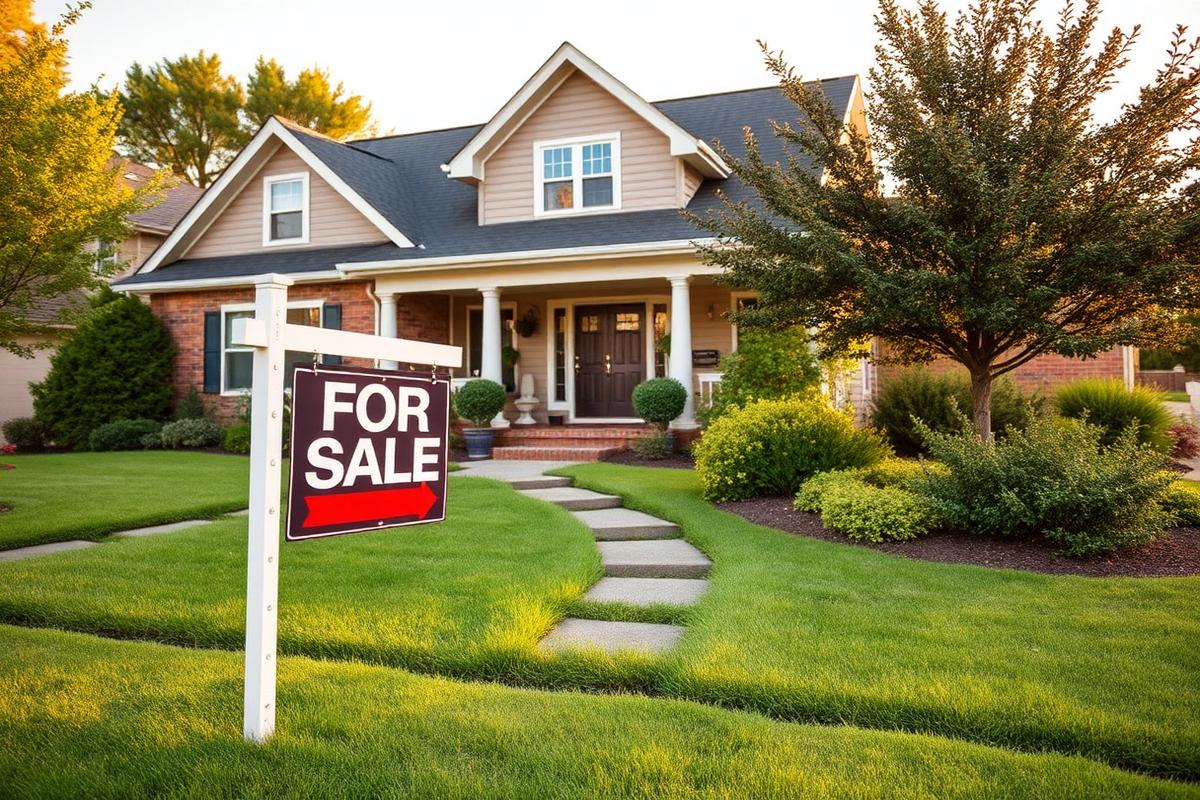
New construction in the Indianapolis Metro is rising steadily, but it skews heavily toward move-up and luxury price points averaging around $435K. Suburbs like Westfield, Fishers, and Bargersville lead in builder activity, and buyers have more time and inventory to choose from than during the pandemic frenzy.
What are the latest new construction trends in the Indianapolis Metro?
New construction in the Indianapolis Metro is growing steadily, with builder permits up 7% year-over-year as of mid-2025 and demand projected for nearly 23,000 additional owner-occupied units through October 2026. The catch: new builds are concentrated in the upper-mid to luxury price range, averaging around $435,000, with virtually no new homes being built under $225,000. If you're shopping for a modern, move-up home in suburbs like Westfield, Fishers, or Carmel, the pipeline is active and conditions are more buyer-friendly than they've been in years.
What's Actually Driving New Construction in Indianapolis Right Now
The Indianapolis Metro isn't just holding steady on new construction. It's outperforming most of the country. According to the Builders Association of Greater Indianapolis (BAGI), the region has been a consistent "bright spot" nationally, with steady permitting, rising new-home inventory, and healthy price growth supported by net in-migration and relative affordability compared to coastal markets.
The most recent specific permitting figure from BAGI's Q3 2025 report shows 951 new home permits issued in July 2025, up from 856 in July 2024, a 7% year-over-year increase. That's a concrete signal of builder confidence, not just optimism.
At the same time, HUD's Comprehensive Housing Market Analysis for the Indianapolis-Carmel-Anderson metro projects demand for 22,850 additional owner-occupied units during the forecast period from October 2023 through October 2026, with 4,125 homes already under construction expected to help meet that need. The demand is real. The question is who can actually afford what's being built.
New Construction Pricing vs. Existing Homes
Here's the gap that surprises most buyers I work with. According to HUD's January 2025 Housing Market Profile for the metro, for the 12 months ending November 2024, the average new home price was approximately $435,100, up 2% year-over-year. The average existing home price over the same period was $316,700, up 6% year-over-year. That's a gap of roughly $118,000 between new and resale.
A Spring 2026 analysis from the Indiana Business Research Center (IBRC) uses a median new construction price of $404,945 when modeling affordability, and finds that approximately 51% of households in the Indianapolis MSA cannot afford that price point under standard underwriting assumptions. Even more striking: zero new homes are being built under $225,000, meaning roughly 190,000 metro households are completely shut out of the new construction market. Only about 300 homes are under construction in the $225,000-$275,000 range, serving a potential market of around 60,000 households.
That's not a small gap. It's a structural feature of where the market is heading.
| Home Type | Average Price (12 months ending Nov 2024) | Year-Over-Year Change |
|---|---|---|
| New Construction | $435,100 | +2% |
| Existing Homes | $316,700 | +6% |
| Overall Metro Average | $329,200 | +4% |
Source: HUD PD&R Housing Market Profile, January 2025. These are the most recent federal figures available as of August 17, 2026.
Where the Inventory Story Stands in 2026
The statewide picture has improved meaningfully from the ultra-tight years of 2020-2022. According to the Indiana Association of REALTORS® 2025 Market Wrap-Up, new listings statewide rose 5% from 2024 to 2025, reaching 101,385 listings, with average daily supply nearly 16,000 homes, about 20% higher than in 2024 and the highest in five years.
Local 2026 market commentary from Roots Realty notes that housing inventory across the Indianapolis metro has increased nearly 18% compared with early 2025, and that homes are now averaging 35-50 days on market, versus sub-20 days during the pandemic frenzy. New construction specifically tends to sit longer, with local expert estimates of 60-120+ days on market for new builds, reflecting longer build timelines and more deliberate buyer decision-making at higher price points.
If you've been waiting for a moment when you actually have time to think before making a decision on a new build, this is closer to that moment than anything we've seen since 2019.
Where New Construction Is Concentrated (and What That Means for Buyers)
Not all suburbs are created equal when it comes to builder activity. Local market research and brokerage commentary consistently point to Westfield, Fishers, and Bargersville as the most active new construction hotspots in the metro right now, with builders still offering incentives in some of these communities. Westfield and Fishers are in Hamilton County. Bargersville is in Johnson County. All three have seen significant master-planned community development with modern layouts, larger lots, and higher-end finishes.
For buyers looking specifically in the luxury segment, areas like Chatham Hills, Village of West Clay, Holiday Farms, and Bridgewater Club represent the upper tier of what new construction and custom builds look like in this market. These aren't production homes. They're custom and semi-custom builds with the kind of specifications and community amenities that justify the price point.
I work with buyers in these communities regularly, and the conversations are very different from what they were in 2021. You have options. You have time. And in some cases, builders are willing to negotiate on upgrades, lot premiums, or rate buydowns in ways they simply weren't two years ago. Your specific situation will depend on the builder, the community, and the timing, so it's worth having someone in your corner who knows which builders are moving inventory and which ones have more room to work with.
What the 2026 Forecast Says About Pricing and Inventory
Local projections drawing on IBRC's 2026 Indiana housing market forecast anticipate a roughly 6.4% decline in sales volume alongside a 6.6% increase in prices for the Indianapolis area. Nationally, residential construction activity is expected to soften in 2026 as well. For builders, that math points toward focusing on higher-margin, feature-rich homes rather than lower-margin entry-level product. It reinforces the trend we're already seeing: new construction in Indianapolis is becoming more deliberately positioned as move-up and luxury product.
A separate local market guide citing MIBOR and F.C. Tucker research reports that as of November 2025, the metro-wide median closed price was $315,000, up 6.8% year-over-year, with 2.8 months of inventory, still a seller's market but considerably less extreme than 2021-2022. The same guide projects price growth of 4-7% metro-wide for 2026, with Carmel and Zionsville potentially leading at 6-9%, and inventory rising toward 3.5-4 months by Q4 2026.
These are projections, not guarantees. But the direction is consistent: prices continue to appreciate, inventory is gradually improving, and the luxury new construction segment is where the most activity and builder investment is concentrated.
If you're weighing whether to buy a new build now versus waiting, the honest answer is that it depends on your price point, your timeline, and what you're trying to accomplish. That's exactly the kind of analysis I walk my clients through before we ever set foot in a model home.
Frequently Asked Questions
Are new construction homes in Indianapolis still more expensive than resale, and by how much?
Yes, significantly. According to HUD's most recent Housing Market Profile (through late 2024), the average new construction home in the Indianapolis-Carmel-Anderson metro was approximately $435,100, compared to $316,700 for existing homes. That's a gap of roughly $118,000. New builds have been trending toward move-up and luxury price points, with the IBRC citing a median new construction price of $404,945 in its Spring 2026 affordability analysis.
Can I find truly affordable new construction in Indianapolis under $300K, or is it all luxury now?
The honest answer is that the affordable new construction pipeline is extremely thin. A Spring 2026 IBRC analysis found that zero new homes are being built under $225,000 in the metro, and only about 300 homes are under construction in the $225,000-$275,000 range. Below $300,000, your options in new construction are very limited. If that's your budget, resale homes will give you far more choices, and I can help you identify where the best value is in that range.
Which suburbs around Indianapolis have the most new home communities right now?
Westfield, Fishers, and Bargersville are consistently cited as the most active new construction hotspots in the metro, with strong builder presence and ongoing incentives in some communities heading into 2026. Hamilton County suburbs like Carmel and Westfield also anchor the luxury end of the new construction market, with communities like Chatham Hills and Village of West Clay representing the upper tier of custom and semi-custom builds.
How long does it typically take to build a new construction home in the Indy metro?
Build timelines vary by builder, complexity, and community, but local market commentary suggests new construction homes in Indianapolis are currently averaging 60-120+ days on market after completion, which reflects longer build and decision timelines compared to resale. From contract to move-in on a production build, timelines commonly run 6-12 months depending on the builder's backlog and your selections. Custom builds can run longer. I always walk my clients through realistic timeline expectations before we go under contract.
Are builders in Indianapolis offering incentives or rate buydowns given current interest rates?
Many are, and the range of what's on the table has gotten more interesting as inventory has grown and days on market have stretched. As new construction homes sit longer, builders have more motivation to sweeten the deal rather than cut the sticker price (which would affect their comps). Here's what that can look like in practice:
- Rate buydowns: Builders with in-house or preferred lenders will often contribute funds to buy down your interest rate, either temporarily (a 2-1 buydown that reduces your rate for the first two years) or permanently. This is one of the most common incentives right now and can meaningfully lower your monthly payment.
- Closing cost contributions: Some builders will cover a portion of your closing costs, which can add up to several thousand dollars depending on the purchase price and what's negotiated.
- Design center credits: Rather than discounting the base price, builders often offer credits toward upgrades at their design center. Think flooring, cabinetry, countertops, fixtures. This keeps the sale price intact while giving you real value.
- Lot premium reductions or waivers: Premium lots (cul-de-sacs, backing to green space, larger square footage) carry added cost. In a slower-moving market, builders may reduce or waive those premiums to close a deal.
- Appliance packages or additional features: Some builders throw in finished basements, extended patios, appliance packages, or landscaping packages as part of a promotion, especially on spec homes they need to move.
One important thing to know: many builder incentives are tied to using their preferred lender. If you bring outside financing, you may lose access to some or all of those incentives. That doesn't mean you should automatically use the builder's lender, but it's a tradeoff worth understanding before you walk into a sales office.
What's available changes by builder, community, and how much inventory they're sitting on. Having an agent who knows which builders are actively incentivizing and which ones are still holding firm is one of the most practical advantages you can have going into this process. I track this across the communities I work in regularly.
New construction in Indianapolis is rising, but it's rising in a specific direction: modern, move-up, and luxury. If that's where you're shopping, the market is more navigable right now than it's been in years, and having a local expert in your corner makes a real difference in knowing where the value is and where the builders are willing to work with you.
I'm Maddie Moeller with Wise Group at Keller Williams, and I specialize in luxury homes, custom builds, and new construction across the Indianapolis Metro, including Chatham Hills, Village of West Clay, Holiday Farms, Bridgewater Club, and Geist Waterfront. If you're exploring new construction or want to talk through what the current market means for your specific situation, reach out directly.
Related reading: the full buy versus build cost breakdown, new construction inside Holliday Farms, what move-up buyers face in Hamilton County.
Call or text me at 317-292-2305, visit maddiemoellerrealtor.com, or connect with me on Instagram at @maddiemoellerrealtor. You can also reach me by email at maddiemoellerrealtor@gmail.com.